
Tuesday
I’d like to package up my life
all the bits that make it up
and place it on a shelf
in a white box
tied up with a golden satin ribbon —
leave it there
safe
for a while
while I try on something
new.
Style, books, decor, travel, life…

Tuesday
I’d like to package up my life
all the bits that make it up
and place it on a shelf
in a white box
tied up with a golden satin ribbon —
leave it there
safe
for a while
while I try on something
new.
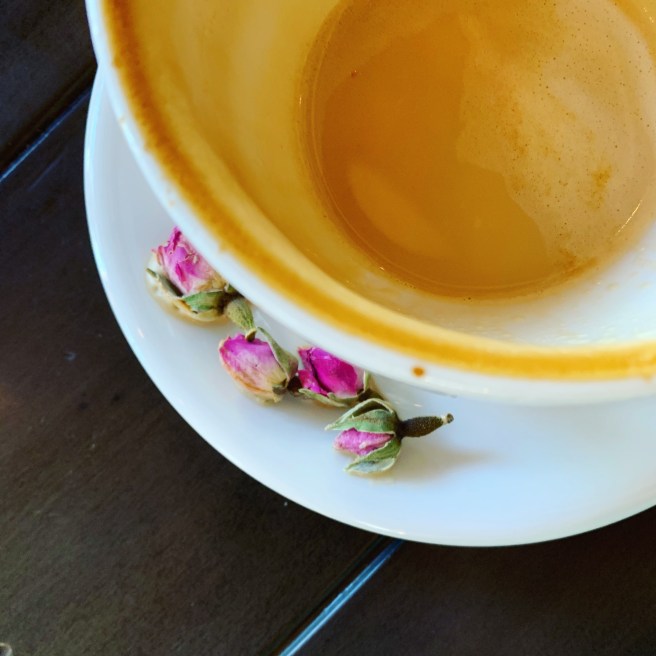
quiet ache, slow burn
my yearning heart in your hand
“keep it safe,” I beg

On this beautiful sunny Friday, I’d like to take a minute to talk about vulnerability. It is perhaps the bravest act one can take, to be vulnerable with someone else, is it not? To open up, to show someone something real and deep and true, and risk rejection or ridicule when all you desire is to be seen. Seen and loved.
I watched Brené Brown’s Netflix special The Call to Courage the other night, and I am still thinking about it days later. Her research on shame, vulnerability, and courage is amazing, but her humor and compassion make it that much more poignant and powerful a presentation. Brown is witty and insightful, bringing her research together with anecdotes from her own life to show us that we are in it together, we need each other, and we can only forge those connections by being brave. Highly recommend.
With that in mind, I found Melanie Hamlett’s excellent article to be especially timely. Hamlett discusses toxic masculinity and the ways it forces women to take on a hugely unequal amount of emotional labor. This is certainly not news, per se, but in her take, she explores a new wave of men’s groups that are encouraging vulnerability, communication, and mutual support. Our #MeToo era of “wokeness” seems to have more men thinking hard about their own emotional needs. Drinking, trying to “get laid,” ogling women, and playing contact sports have traditionally been the only socially-sanctioned ways for men to connect with each other, all of which reinforce painfully toxic tropes about “being a man.” Furthermore, the idea that men should only be emotionally open with women, and that they should find “their one and only” to connect with, left many female partners shouldering far more emotional work than they could handle. These small, intimate new men’s groups offer the opportunity for healthy emotional connections, and have the side benefit of easing some of the emotional labor burden off of the women they love. Win-win.
Perhaps we’ve been onto something all along with our ladies’ nights and brunches with the girls — and thankfully, many men are starting to catch on. Emotional support networks are necessary for all of us, and outlets for vulnerability — as brave as one must be to go there — can only make us stronger.


As you might guess, my drive for perfection makes it difficult to be a beginner. Recently I started taking ceramics classes, though — and when you start something new, you have no choice but to start at the beginning. Time for beginner-ing. Ooof.
I’ve wanted to learn to throw pottery for ages. Something about the instant gratification that comes with a guided touch on clay, the graceful turning of forms and hands on a wheel, and the wabi-sabi imperfections that make up a particularly stunning glaze — all of these things have beckoned me for quite some time. Rather than wait until I had some time, I finally decided to make some time this month to make it happen, and I am so glad I did.
The wheel and the clay both have their own learning curve, I have realized. Gravity and centrifugal force have their own demands as well. There is a sweet spot to be found between clay that is wet enough to become what you envision, and too wet to maintain the form you’ve shaped. There is a strange satisfaction in trimming a piece, leathery clay spinning in ribbons off the wheel as you uncover the shape you’re imagining. And there is a magical alchemy to glazes — the way minerals and heat combine to transform into something unexpected and beautiful. That minty-green goop you just dunked a bowl into? Of course it is going to be cobalt blue when fired. Fascinating, yes?
Beginner’s mind is a challenge to get into as an adult. Our society demands knowledge, know-how, swagger, confidence, momentum. Being a beginner requires curiosity, surrender, awe, wonder, and acknowledgement of another’s superior skills. It requires you to be open, vulnerable, and even silly. It requires resilience. A beautiful bowl can become a lopsided twist of clay in a heartbeat, and all you can do is laugh, smush and knead, and begin again. I’m working on squishing down my irritation along with my misshapen clay, working on laughing and shrugging my shoulders, working on going with the flow, working on embracing a “flawed” piece as one I can learn from and experiment with. And you know what? It’s fun. It’s hard and messy and fun. And I am learning.
I have yet to fully complete a piece yet, so this is all about the journey so far. Considering how results-driven I can sometimes be, I am surprised how much I am relishing it. Each step is new and different and hard and exciting. I’m eager to see how my work will turn out once it’s been fired, of course, but (shockingly) I’m even more excited to keep learning and creating — because there is so much to enjoy along the way.
 I recently finished reading Octavia Butler’s Xenogenesis trilogy, and just had to share. Published under the collection title Lilith’s Brood since 2000, it is made up of three novels: Dawn, Adulthood Rites, and Imago. Butler is an excellent storyteller, with a “hard science fiction” bent in this trilogy that is satisfying as well as thought-provoking.
The series takes place in an interesting sort of dystopian future, where humans have destroyed Earth and each other almost completely. An alien race steps in to save what is left, hoping to trade genetic material to ensure the survival of both humanity and themselves. The aliens believe humankind, if left unaltered, contain a “Contradiction” between their high intelligence and their hierarchical nature that will lead to eventual demise in every scenario, as was already proven by our destruction. A fascinating thought to consider, isn’t it?
While my own personal prose style preference strays closer to that of Amor Towles, thematically Butler does a masterful job of exploring sexuality, race, species, gender, and humanity — deftly and also in an entirely un-preachy way. While decades old at this point, Lilith’s Brood is almost frighteningly relevant to us today. Are we doomed to obliterate ourselves without some kind of outside intervention? Can our intelligence outweigh our hierarchical strivings? Is our stubbornness a boon or a hindrance? It may be that history will have to play itself out before we can answer these questions, but Butler gives us a powerful nudge to think about these things sooner than later — all tied up in an engaging alien-encounter package.
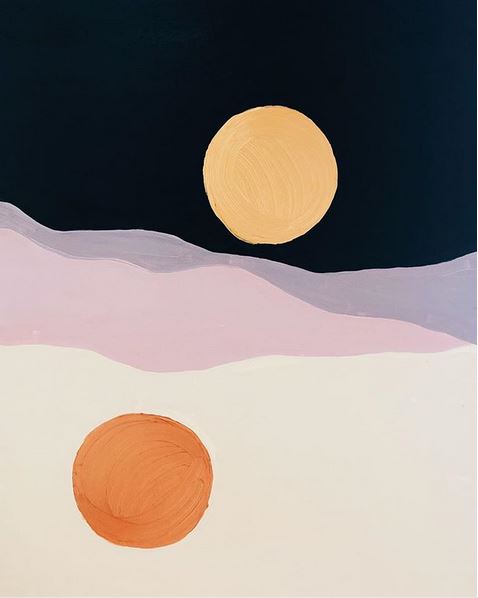
“I’ll never know and neither will you of the life you don’t choose. We’ll only know that whatever that sister life was, it was important and beautiful and not ours. It was the ghost ship that didn’t carry us. There’s nothing to do but salute it from the shore.”
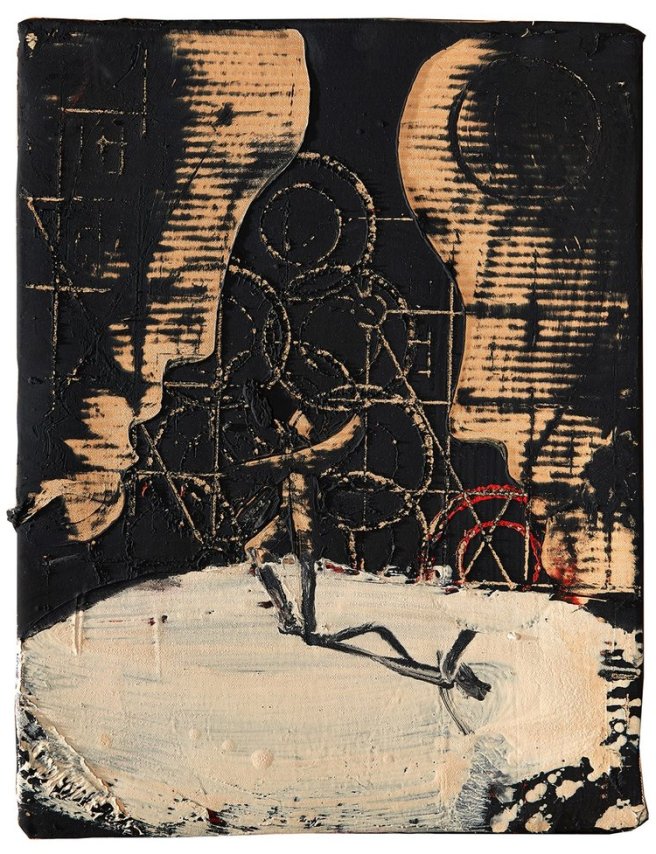
today I rock the boat
ripples in a pond radiate out into my world,
effects unknown but stillness is hoped for
in a far-flung eventuality
where I receive comfort and hope
solace and acceptance
instead of giving until I am empty
pouring myself out into a mold
I have not chosen
until no longer recognize
the shape I have taken
in the name of harmony
cost unrealized until it becomes
too high to bear.
ragged and strung out are my
feelings
soul
breath
a collage I am finally able to view from above
if not with clarity, then compassion
and a small bud of resolve
to pick up the pieces
and reshape them
until the self I so long to be
blooms
even if the glue
must be my own
sinew and bone.

Yesterday I finally made time to read this excellent article on burnout, and it was well worth the long read. Anne Helen Petersen is observant and strikingly perceptive in her assessment of how Millennials have become the burnout generation. We work hard, have endless side-hustles, have it drilled into us that we must find work that we are passionate about that also pays the bills, all amidst the fallout from an economic downturn that will likely stunt us for the rest of our lives. Oh, and don’t forget, we need to look good doing all this on the ‘Gram. I’m exhausted just typing all that.
While I don’t share her exact malaise in terms of the small daily errands, so much of life these days just feels hard. I commute for over 3 hours every day, work hard at what should be my dream job where I get paid chronically not enough, serve on the board of a nonprofit, act as committee chair in a professional organization, and no, I haven’t chosen a dentist on our “new” (as of four years ago) dental plan, because who has time to sift through dozens of providers to find someone I am not afraid will advise me to get fillings I don’t need? The whopping hour and a half of “down time” I have when I get home is devoted to cobbling together some sort of dinner, feeding my pets and walking the dogs, tidying the house, doing an errand or two, and then I get to relax… oh, wait. No, actually I don’t. I crash in bed and try vainly to push past my anxiety get a full 8 hours of sleep before hauling myself out of bed to go the gym before I go to work like someone who has it together, what ever “it” is.
We are the first generation in a long time to actually have it worse than our parents, but the meritocracy of the American Dream has been repeated to us so many times, that we think if we just work harder, longer, better, then we’ll finally get ahead. So we work more hours at the entry-level jobs we took that we were overqualified for, stay tethered to our phones in case our bosses need something, pursue our side-hustles because of course the gig economy means more opportunities (!) … and we are burning out. Hello, burnout generation.
I’m not sure what the answer is. Maybe awareness will at least help mitigate the mental burnout load. Financial constraints and the feelings of futility that accompany them will certainly not go away with some internal reflection. But I am hopeful that “thinking about life, and what joy and meaning we can derive not just from optimizing it, but living it,” might be a way forward. All I can do is try. Maybe even hustle a little.

Happy new year, and welcome to 2019! It seems we all have resolutions at the beginning of January, and one by one we let them fall by the wayside, with varying levels of guilt. In the past few years I’ve decided to forego resolutions for that very reason. Inevitably I find myself in a contemplative and reflective mood as the year closes, though, so instead of resolutions, I like to think about intentions for the year ahead.
This year, self-love is (again) on my mind. I’m still mulling over how I can best take care of myself this year, but on New Year’s Eve I had the not-groundbreaking but also personally startling realization that maybe, just maybe, it is less about “fixing” and more about acceptance. I tend to wonder what is wrong with me, and then set about trying to fix it. Perhaps the key is not to fix, but to be still, accept, sit with, and be. Rather than railing against my restless spirit and striving for an ever-elusive contentment, perhaps I can acknowledge that as part of my nature. Perhaps contentment is less a state of being to be achieved, and more about enjoying snippets of joy and happiness as they are found, and made, and stumbled upon.
Wishing you joy in this new year, in whatever form it takes!
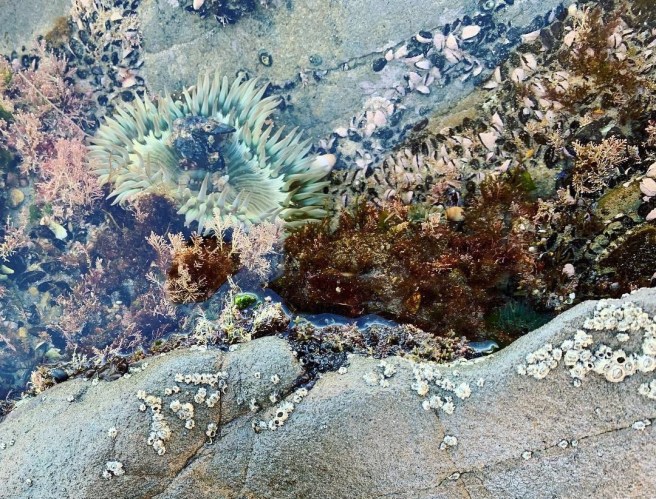
Sometimes, you need to just go with the flow. Take it one day at a time. Good with the bad, highs with the lows, just go with it. The last month or so has been full of challenges and difficulties, but delightful moments have also popped up to warm me in the shadows. I’m going to have a few days off from work at the end of the month that I hope will be a time to recharge and reset for the coming new year, but in the meantime, I’m trying to float along. I’m just going with it.
 Pink&GreenMusings