Gently beguiling, Otter Country chronicles nature writer Miriam Darlington’s year obsessively observing the wild otter.
A plan formed in my mind. I would explore the places in this land that hid my grail. I would spend a whole year or longer, if that’s what it took, wading through marshes, hiding between mossy rocks, paddling down rivers and swimming in sea lochs; recording my journey through the seasons as I searched for wild otters.
With sumptuous, lyrical prose, Darlington takes us along her winding journey from Devon, England through the waterways of Wales, Scotland, Cornwall, the Lake District, and beyond in search of otters. Marshes, fens, rivers, woodlands — all are rich fodder for searching, seeking, spying, and contemplating a species Darlington has been fascinated with since childhood. Part Walden, part eco-guide, part meditation, and part literature survey, Otter Country gives an account of otters’ habits and habitats as graceful and sinuous as the animals themselves. She deftly winds nature observation, thoughts on conservation, ruminations on the otter’s place in modern society, and sharp commentary on human encroachment into a journey both poetic and educational. Transportive, definitely worth a read.
I had the privilege of attending a book talk and signing for Maggie Smith’s memoir You Could Make This Place Beautiful at Vroman’s Bookstore in Pasadena recently, with the discussion led by fellow poet Jennifer Pastiloff. I was struck by an overwhelming sense of female camaraderie in the room that evening that was so beautiful, it made me ache. (In no small part it was also thanks to my dear friend Molly who accompanied me.)
Guided by Pastiloff’s excellent questions, Smith touched on several topics, starting with being “bored with genre.” “I don’t need to classify something to make it,” she stated, setting her memoir free from genre in that quietly confident way of hers. It is a memoir, yes, but also a meditation of sorts. An unspooling. And always, always poetry.
On boundaries: “I built it my way and then I needed to be able to shepherd it into the world my way as well, in a way I could make livable.” Smith was touchingly open about her struggles with being seen as her memoir debuted. It chronicles a difficult period in her life that included — but certainly was not limited to — her divorce, and the reckoning in it’s unfurling and aftermath. For a poet who is used to the distance afforded by being The Narrator, being herself in all her raw glory was a new and painfully exposed way to be seen. Thank you, Maggie, for your courage and your willingness to be vulnerable. We have this beautiful unspooling corkscrew of musings thanks to your willingness to share, be open, and give us your “tell-mine” of a book.
On being ‘good’: “Part of being good is being liked, so what happens when you do something that makes you unlikeable?” Smith and Pastiloff both posed this question, one the question of being “bad” and the other of being “good,” both asking the same thing in the end. Are we bad people when we try to find our way to something different? What does being “good” mean for us? For women it means being likeable. Pleasant. Pliant. What happens when we choose not to be?
On perspective: “How did I let myself become so small? How did I let my writing become so small?” As women, it is almost as though we need permission to make ourselves and our work — our true creative work, not just our jobs — priorities. It is sinuous and slippery, this insidious expectation that we often don’t realize is there until a sudden shift in perspective allows us to see how small in our own lives we have truly become. It is a reckoning, but also, a light if we let it be. “I was looking for permission to do something a different way,” mused Smith. What if the only one we need permission from is ourselves?
Smith’s memoir is as poetic as you’d expect, lyrical and sharply observed by turns, musing and marvelous. Pick up a copy today, pick up a metaphorical lantern, and walk with her a while. You won’t be sorry you did.
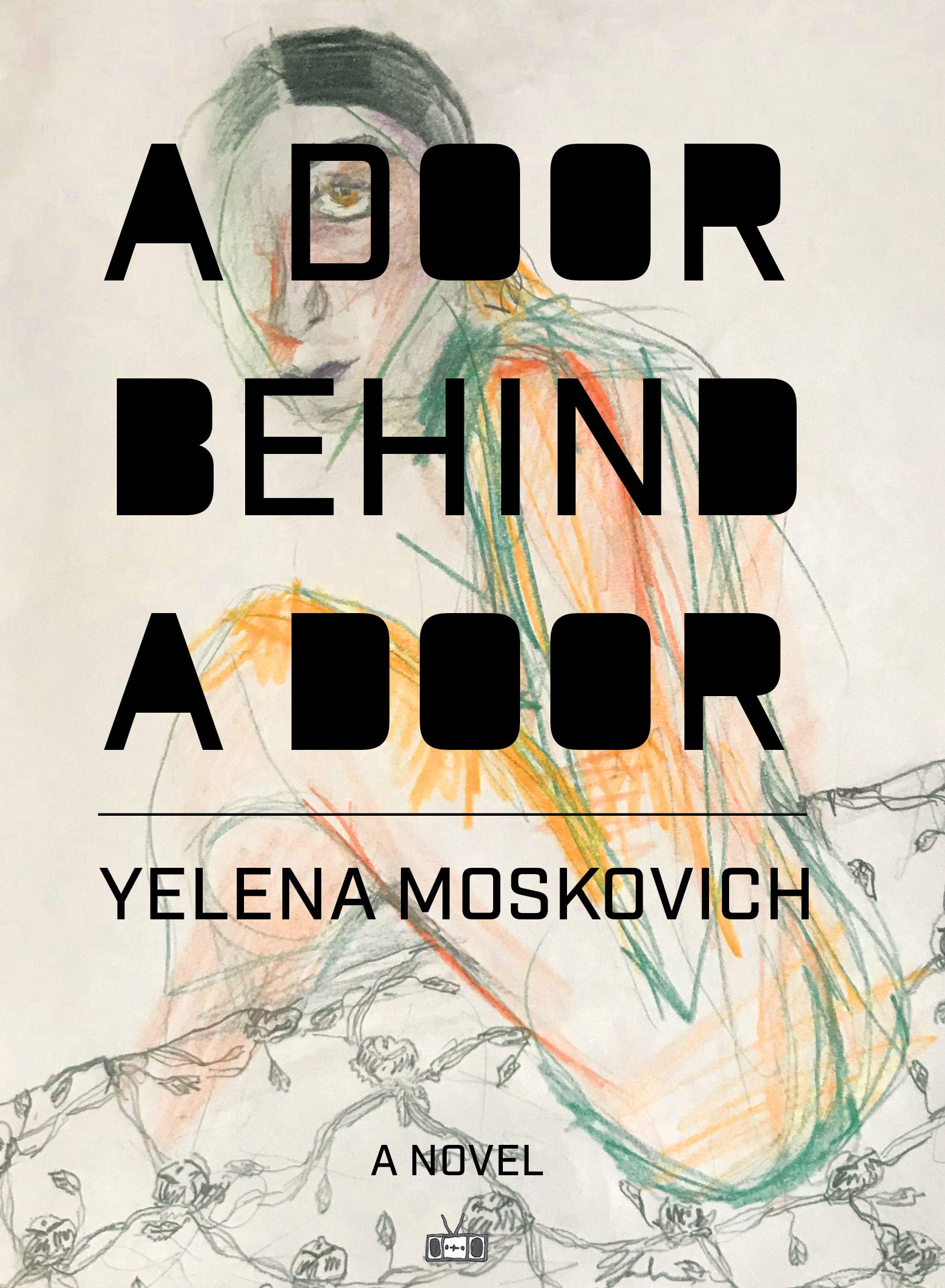
To get to Hell,’ he says in a low voice, ‘they take you through America. There is a door behind a door.’
My partner and I read the dreamiest, most evocative experimental novel recently, A Door Behind A Door. Yelena Moskovich has created perhaps the ideal read for this bizarre moment in time: a loose-yet-considered dreamscape that pulls together the 1991 Soviet diaspora, Jewishness and identity, queer desires, a murder mystery, romantic and familial love, and micro- and macro-level power dynamics, with a sprinkling of incarceration politics thrown in for good measure. It is neither fish nor fowl nor good red herring – Moskovitch has delivered us a compact, fragmented fever dream that is just as much a novel as it is extended poem and expansive allegorical metaphor. Gradually you will feel increasingly unmoored from reality while simultaneously honing in on every word and sentence, so deftly does she utilize nuance and precision of language. A Door Behind a Door is utterly unlike anything I have ever read. Haunting, sexy, violent, and thought-provoking, pick up this novel and buckle up for the post (post?) pandemic read you didn’t know you needed.
This post contains affiliate links. Thank you for supporting more musings!
Last night I read a book that I could have written. Lyric and melancholy, musing, yearning, seeking — philosophical, if you will.
Today’s book, the pages are full of you, have you all over them. A novel of tight, clipped prose. Simple. Deceptively so. Something new for me to touch that feels all too familiar.
Maybe somewhere these books are on a shelf, touching in ways that we cannot seem to no matter how much I ache.
Sex. It’s personal in the most intense of ways. It’s beautiful and exhilarating and deeply unique to all of us. And it can be a theoretical minefield for those of us striving to be “good feminists.” With that in mind, I submit to you a pair of articles to ponder.
Sarah Resnick explores the push-pull of control and women’s desires in the context of Miranda Popkey’s début novel, “Topics of Conversation.” She asks us about the liminal space between the simplicity of embracing another’s authority, and assembling one’s own story as a means of control and therefore, power. Modern feminists are supposed to be in control, to know what they want, to not be afraid to ask for it, or to take it for themselves. But what if we want, sometimes, to give up control? What if, sometimes, that prospect is sexier than anything? Is that bad? Are we bad feminists? Resnick visits Amia Srinivasan’s essay, “Does Anyone Have the Right to Sex?” from 2018, asking whether feminism should have anything to say about desire at all, testing the lines between creating more binds for the people it means to liberate, and excusing patterns of desire that replicate broader patterns of oppression and exclusion. If a woman enjoys sexual submission, who are we to say she shouldn’t?
This conversation broadens beyond control and desire and asks the question of where and how our desires — often perceived to be innate and even perhaps immutable — are actually shaped to a certain extent by social conditioning. How much is our gravitation towards a certain “type” simply our own preference, for example, and how much is subconsciously ingrained racism? From perceptions of beauty and attractiveness to reevaluating our values, Schwartz takes us on a thoughtful journey that circles down to the idea that “maybe we shouldn’t worry too much about how to shift what we want but instead… recognize that we may be wrong about what we think we want, and embrace the possibility of wanting something different.” And then we loop back again to control: “Vulnerability entails risk… and sex is never free from the dynamics of power. That is what makes it scary, and also, sometimes, wonderful.”
As scary as it can be to probe and question our own desires and wants, clearly it can also be wonderful. From a place of discomfort or the kind of ambivalence Srinivasan encourages us to dwell in, perhaps we can find a more expansive version of pleasure — and of ourselves. And isn’t that the kind of liberation we want from feminism in the first place?
Read, ponder, and enjoy. I hope you find these selections as thought-provoking as I did.
On a less theoretical note, tomorrow October 2nd is a chance to mobilize and defend reproductive rights and a woman’s right to choose. Visit https://womensmarch.com/mobilize to find events near you.
You know how sometimes your brain can be on overdrive? Not for a little while, but for several days or weeks? Lots of things swirling around, lots of opportunities for growth to be had, lots of love and heartbreak, maturing, digging, seeking, pondering, and finding. Sometimes those days or weeks require something small, focused, and a touch mindless, even if just for a little while.
While I am always grateful for times of growth like this, it is hard. And draining. So what did I do today? After I got dressed and walked the dogs, somehow I wound up in our hallway facing my bookshelves. For the next couple hours, I sorted and purged. I organized, alphabetized, puttered, and shifted. The biggest questions I had to face were, “will I want to read this again?” and “if so, can I do it easily online or through the library?” Done and done. A couple books I kept for purely sentimental reasons beyond my read-it-again criteria, but by and large, the sentimental and the read-it-again columns neatly matched. And it was so. very. satisfying. I now have a few stacks of well-loved YA fiction to pass along to my niece and nephew, and still more to donate to the local library book sale, or to sprinkle into the little free libraries in my neighborhood. I now have no recent additions leaning haphazardly here and there for lack of space, and perhaps the best part — I had a couple hours of very Zen focus on a single enjoyable, achievable task.
This afternoon I’m feeling a little less frazzled, a little more calm, and a little more even-keeled than I have in a few weeks. For the anxious overthinker in me, that is a huge win. Big questions are good to grapple with, but sometimes we need small things to give ourselves time to rest in between. What kind of little win can you gift to yourself this weekend? May I suggest a bit of decluttering or organizing? For me, at least, this little thing felt big — in the best way.
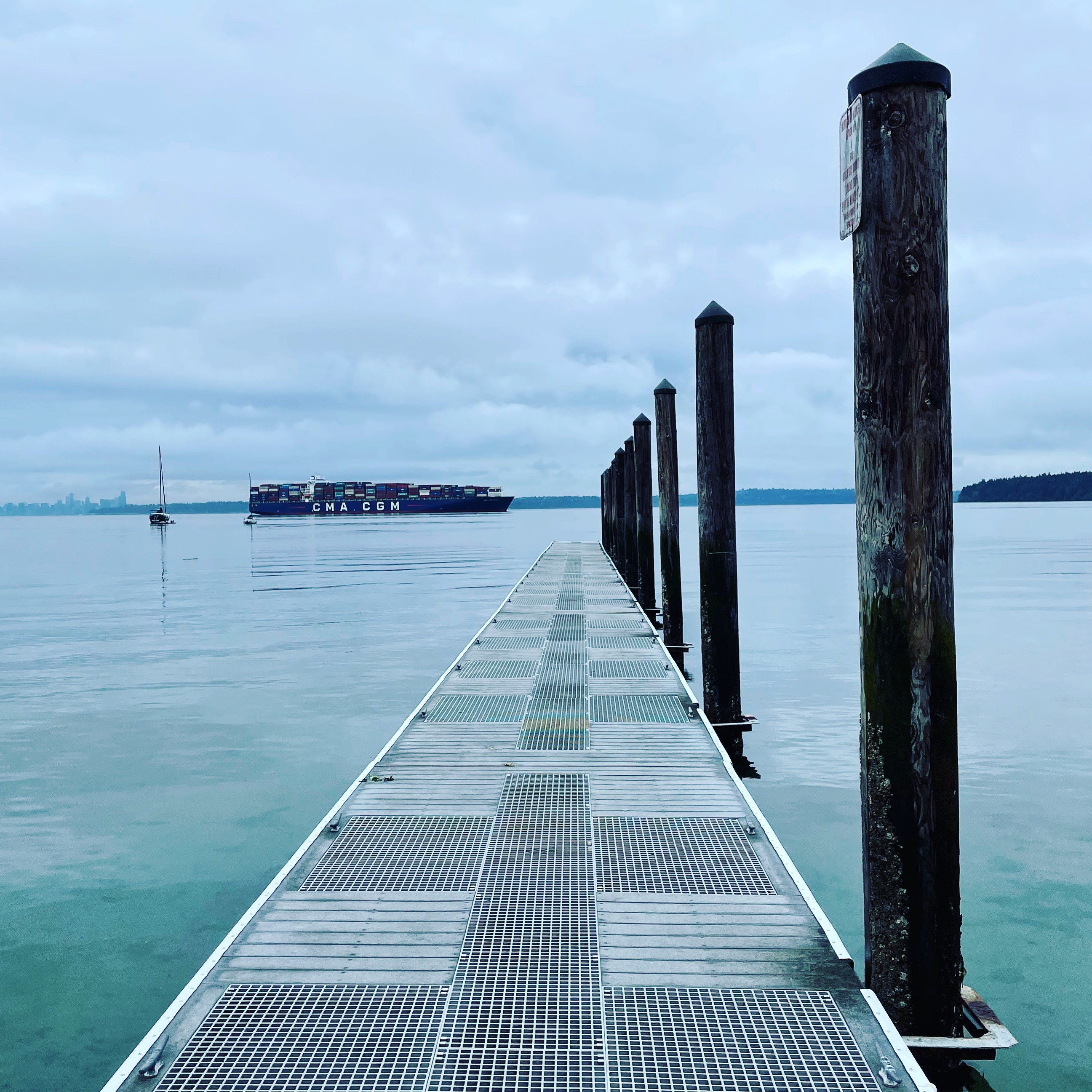
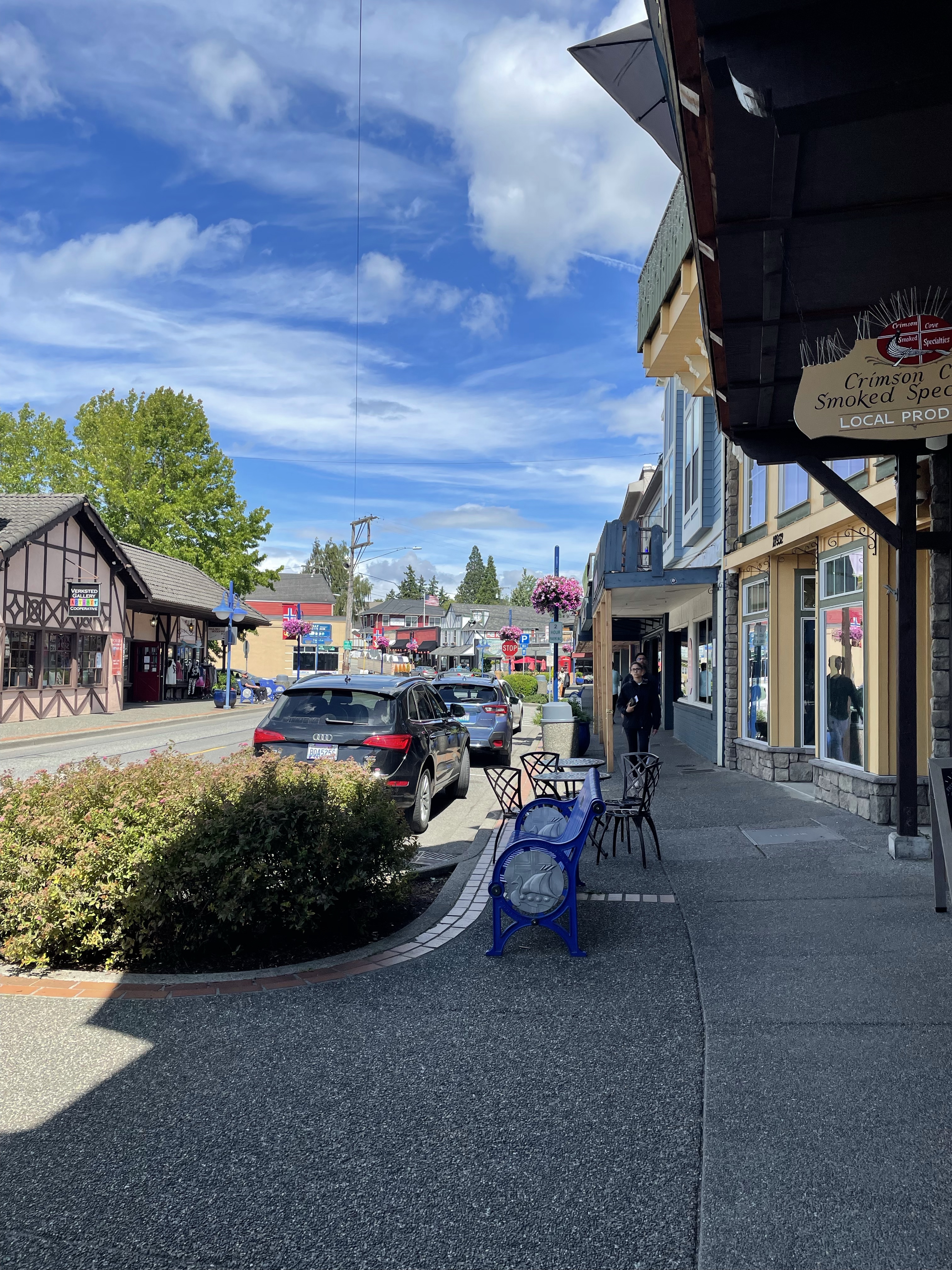
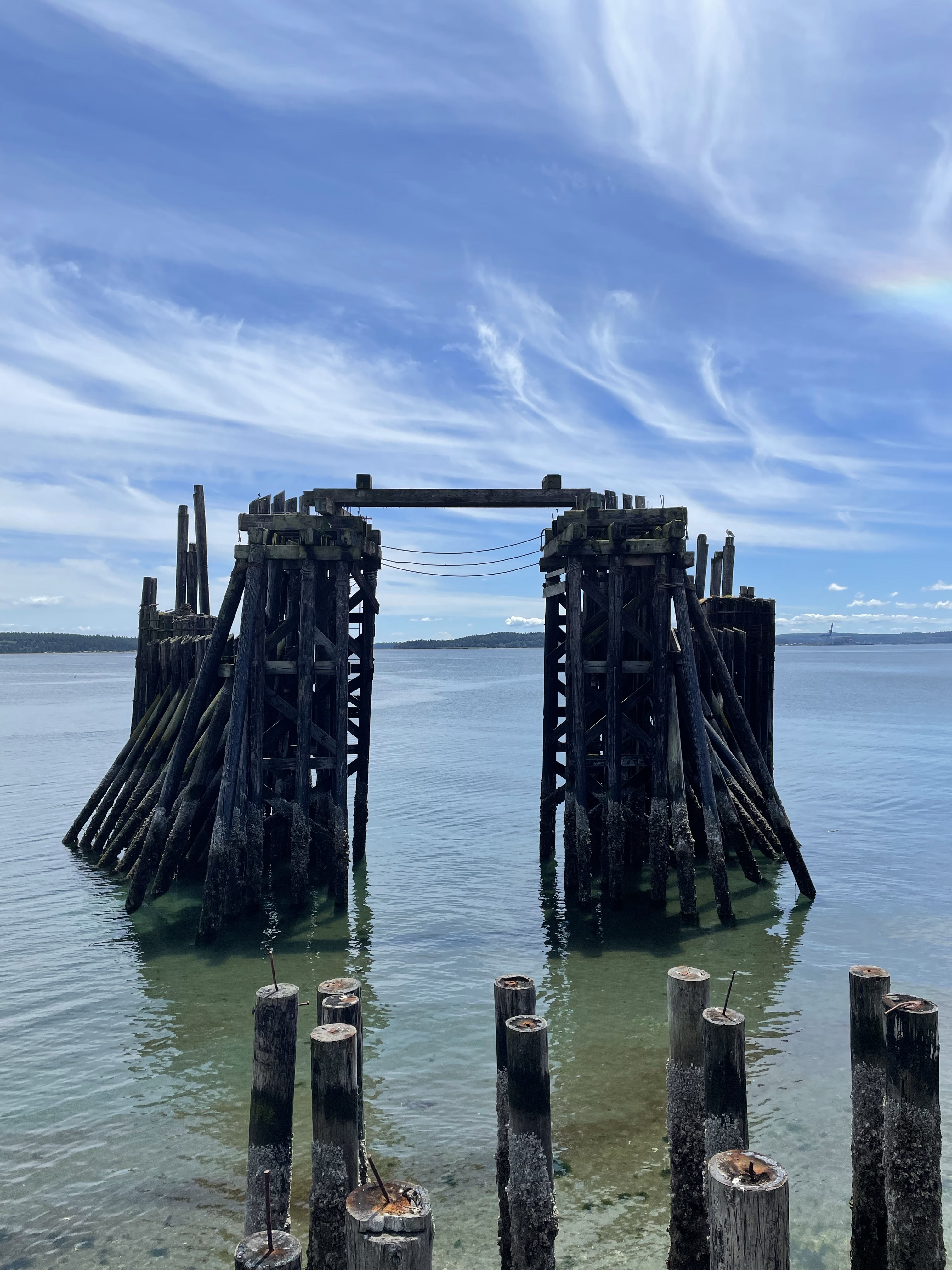
Travel is looking very different — or nonexistent — for a lot of us these days. A few weeks ago I had the pleasure of visiting a dear friend in Washington, and we explored the little towns of the Olympic Peninsula by day and cozied up to watch movies by night. Paired with slow, quiet mornings, cup of tea in hand, it was the perfect foray back into travel, sans crowds or stress.
Unlike Southern California, where most cities sort of bleed into each other as you drive, there are trees and greenery aplenty in between each town in this area of Washington. You can travel a relatively short distance and feel like you have traveled far and wide, as each town has it’s own character, quirks, and charms. Puget Sound is quietly omnipresent everywhere you go, a stunning blue-grey backdrop that is integrated into daily life in a way that fascinated me. Residents here will see it, have to go around it, over it, or through it every day. It made me reflect on “life on the water” in a new way, one very different from my youth living in San Diego not far from the beach. It’s not a spot to visit here, but part of the fabric of every day.
Little Manchester with its lovely views, the historic buildings of Port Townsend, the Scandinavian charm of Poulsbo, the windswept beaches near the Kingston ferry — I loved my time in Washington. If you’re looking for a place in unwind, explore, and spread your post-lockdown wings a little, maybe find a waterfront cottage on Airbnb and take in the serene charms of the Olympic Peninsula for a few days. Whatever you do, make sure to visit the bakery in Poulsbo. Trust. I could have cried at finding the bread I remember eating as a kid, best served toasted. Also perhaps the best apple strudel I have had in my entire life.
If you aren’t convinced yet, here is a smattering of photos from my visit. Enjoy!
Thank you so much, B, for being the best host and companion. Much love.
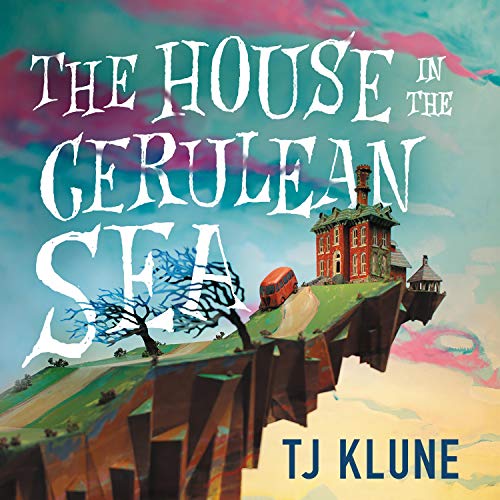
A very dear friend recommended this book recently, and I am so grateful he did. The House in the Cerulean Sea by TJ Klune is the kind of book you pick up and don’t want put down, just from the sheer heartwarming loveliness of it. I read it over a few days while on a short vacation, and the sweetness of both my trip and this story will be staying with me for a long time.
Meet Mr. Linus Baker. He is a case worker for DICOMY, or the Department in Charge of Magical Youth. His job is to visit orphanages for magical children and produce strictly impartial reports on their efficacy. His days are largely the same: dull grey and tedious, and he is remarkable in only his studious self-effacement. That is, until a unique assignment from Extremely Upper Management puts him on a collision course with love, joy, purpose, and his very first glimpse of the ocean. Intrigued? I was, too!
The titular house is actually Marsyas Island Orphanage, a secluded place run by a Mr. Arthur Parnassus. It is full of children who will tug at your heartstrings as much as they make you laugh out loud. Nothing has prepared Mr. Baker for whatever a Chauncey is, much less a six-year-old Antichrist, and their antics drive him to apoplexy. The children are as magically unique as they are uniquely magical, and their caretaker is both mysterious and delightful. I belly laughed, I teared up, and I came back for more even as my nights turned into the wee hours of morning. Beyond the beautifully developed characters is a story about finding oneself, making space for joy, and how even one of us can help bring positive change. Oh, and love. Most of all, this story is about love. It feels like a hug down to the very last page, and I hope you love it as much as I did.
Congratulations to Justina Blakeney on her new book, Jungalow: Decorate Wild! In her most personal book to date, Jungalow is alive with Blakeney’s signature bold colors and patterns, mixed textiles, and plants galore. She centers her adventurous designs squarely amidst her own beautifully mixed heritage and encourages all of us to do the same. I found this to be not only a delightful design perspective, but a timely reminder amidst increasing polarization that we are all enriched by the “magic of mixing.” Cross-cultural food, art, music, design? Yes and please! Her mixes are artful, collected, and so stylish (amazing!) while also being grounded and respectful of deeply rooted traditions. As she shared in a book talk recently, she believes strongly in respecting cultures and supporting artisans. Her seriousness in this regard is matched only by the playful exuberance she brings to decor, and her earnest belief that we can all thrive, grow, and express our creative selves in the home we cultivate for ourselves. Bravo, Justina! I couldn’t agree more.
Jungalow is a feast for the eyes, full of Dabito’s stunning interior photography along with shots from Blakeney’s own travels. The colors are saturated and exuberant — such a delight after a dreary year! Pick up a copy and you won’t be disappointed, I promise.
This post contains affiliate links. Thank you for supporting more musings!
Three great new books have graced my shelves over the past couple weeks, and I just have to share!
One of the small perks of this “new normal” is the plethora of book talks available online, and I was delighted to be able to attend a talk with Kate McDermott on her new book, Pie Camp. Besides being a wizard with all things pie, she is a gem of a human being who finds so much fun and enjoyment in what she does, it is hard not to share her enthusiasm. I am always a fan of people who enjoy what they do, and McDermott is no exception. I had no less than three, “wow, that is genius!” moments in the charming hour we spent together, including this: McDermott tossed together an incredible-looking berry crostata in the last 7 minutes, with which she encouraged everyone to just have fun with fillings. Marionberry preserves, fresh raspberries, and (what?!) dried blueberries tucked into the center of each raspberry, JUST FOR FUN? Genius.
If her previous book, Art of the Pie, is the “why” of pie, then Pie Camp is indubitably the the “how.” Over three hundred pages of methods, recipes, tips, and beautiful photography make for as thorough a primer on sweet pies as anyone could ask for. Fruit pies, custards, creams, crisps, crostatas — oh my! Lattices, braids, and crimps, too! I am more of a cake baker, myself, but I hit the checkout button before I even got halfway through her chat. Now I am looking forward to a pie-filled holiday season — and beyond.
Poet Maggie Smith of “Good Bones” fame has delivered us her genre-defying book, Keep Moving, at just the right moment in time. Originally spurred by her divorce, Smith’s “notes on loss, creativity, and change,” are precisely what many of us need to hear as this pandemic continues to turn our lives inside-out and sideways. Many of the entries are tweets to herself, encouraging reminders to “keep moving.” They are interspersed with the occasional meditation on a beautiful moment, a creative reflection or learning opportunity, or perhaps a small rumination on fear or hope. Whatever the you want to classify this book as, Smith’s grace in the face of change shines through in every page. She’s the encouraging voice reminding us, quietly, than even if all we can do is keep moving, it’s more than enough.
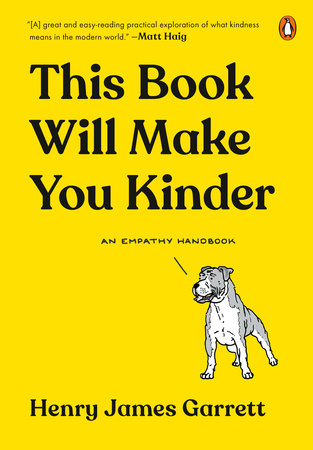
Finally, I could not be prouder of Henry James Garrett and his book, This Book Will Make You Kinder. Garrett may be better known to some as the artist behind Drawings of Dogs on Instagram, with his delightful art and his knack of piercing to the heart of so many social issues with a wittily observant caption or pun. (If you spend even just a couple minutes watching his Instagram stories, you can see what a genuinely kind and lovely person he is, and why I am so proud to hold his book in my hands.)
Now, building on his academic studies and keen interest in ethics, kindness, and morality, Garrett has graced us with an “empathy handbook” — a guide to developing our moral kindness and confronting cruelty in our world. His animal cartoons are peppered throughout his well-considered tome, but he goes far beyond his online art presence to bring us a book I think everyone can and will benefit from reading. Part philosophy, part sociological observation and critique, and entirely accessible, it is as timely as Maggie Smith’s book, but in a different way. Smith reminds us how to keep going, and Garrett reminds us that we need to do so together, with kindness and empathy. And I think McDermott has the right idea — let’s do so with a warm slice of pie.
This post contains affiliate links. Thank you for supporting more musings!













 Pink&GreenMusings